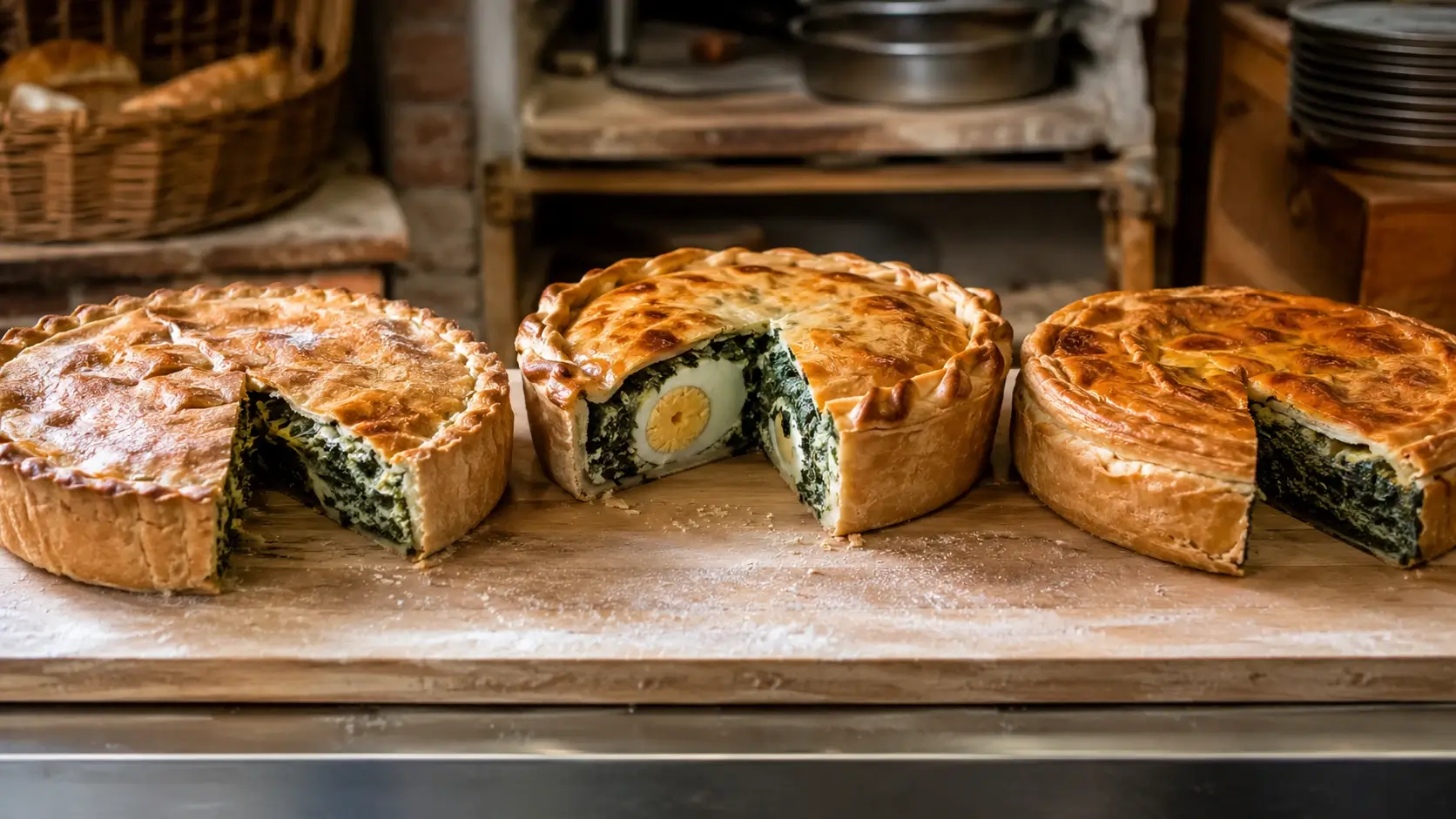
Searching “best tarta de acelga near me” mostly turns up whatever’s closest on a map, not necessarily whatever’s best — Google can’t taste-test a bakery for you. Here’s the honest version: the authentic recipe so you can make one that beats most bakery versions, a quality checklist so you know what to look for if you’re buying one, and a straight answer on how to actually find one nearby.
If You’re Looking for a Place Nearby, Not a Recipe
Search Google Maps directly rather than a general search engine — local bakeries and rotiserías rarely rank in regular search results even when they’re excellent. Look specifically for Argentine or Latin American panaderías and rotiserías, and check a listing’s recent photos before you go — a fresh, glossy top crust in a photo from last week is a better signal than a star rating alone.
What Is Tarta de Acelga?
Tarta de acelga is a savory chard pie — Swiss chard, onion, eggs, and cheese baked inside a golden shortcrust pastry, usually with a second layer of dough on top. It’s one of the most common items in an Argentine “tartas” case, sitting alongside empanadas as a lunch or dinner staple rather than an appetizer.
Its roots trace back to the wave of Italian immigration to Argentina in the early 20th century, which brought savory pie-making traditions that were adapted using local greens and ingredients. Chard took the place of other leafy vegetables used in Italian and Spanish tarts, and the dish became distinctly Argentine over the following decades — today it’s sold in nearly every panadería and rotisería in the country, alongside home versions with their own family variations.
What Separates a Great Tarta de Acelga From a Mediocre One
Use this whether you’re baking or buying — it’s the same checklist either way.
- A crisp bottom, not a soggy one: The single most common failure. Comes down to how well the chard was drained before it went into the filling — excess water always ends up soaking the crust.
- Filling that holds together when sliced: A great tarta de acelga cuts into a clean wedge. If the filling spills or slumps, the egg-to-filling ratio was off.
- A hint of nutmeg: Traditional recipes season the filling with a small amount of nutmeg — it’s subtle, but its absence is what makes a version taste flat.
- Visible chard, not a green paste: You should be able to see distinct pieces of chard in the filling. An overly smooth, uniform green filling usually means it was overcooked or over-processed.
The Recipe
Prep: 30 min | Cook: 40 min | Total: 1 hr 10 min | Serves: 8
Ingredients:
- 2 cups (250g) all-purpose flour
- ½ tsp salt
- ½ cup (115g) cold butter, cubed
- ⅓–½ cup ice water
- 2 lbs (900g) fresh chard, stems removed
- 1 medium onion, finely chopped
- 2 cloves garlic, minced
- 2 tbsp olive oil
- 3 large eggs
- 1 cup (100g) shredded mozzarella
- ½ cup (50g) grated parmesan (optional)
- ¼ tsp ground nutmeg
- Salt and black pepper, to taste
- ½ cup diced ham or bacon (optional)
Instructions:
- Combine flour and salt. Cut in cold butter until sandy. Add ice water gradually until the dough just comes together. Wrap and chill 30 minutes.
- Wash the chard and remove the tough stems. Wilt the leaves, then drain and squeeze out as much water as possible — this decides whether the tart is crisp or soggy. Chop finely.
- Sauté onion and garlic in olive oil until soft. Add the chopped chard and cook until any remaining moisture evaporates. Let cool.
- Beat the eggs, then mix in the cheese, nutmeg, pepper, cooled chard, and optional ham. Taste and adjust salt.
- Divide the dough in two. Roll out the bottom layer into a pie dish, add the filling, and top with the second layer (or leave it open). Crimp the edges and cut a few vents.
- Bake at 375°F (190°C) for 35–40 minutes until deep golden. Rest 10 minutes before slicing.
Common Variations
- Sin tapa — No top crust — the filling bakes exposed, giving a firmer, more golden top instead of a sealed pie.
- Con jamón — Diced ham folded into the filling for a heartier, saltier version common in family recipes.
- Con ricota — Ricotta swapped in for some of the cheese, giving a creamier, softer filling texture.
- Masa integral — Whole wheat crust in place of white flour, for a nuttier base and a bit more fiber.
Questions People Ask
What is tarta de acelga?
A savory Argentine pie made with Swiss chard, onion, eggs, and cheese baked inside a shortcrust pastry, rooted in the Italian immigrant cooking that shaped much of Argentine cuisine.
Why does my tarta de acelga come out soggy?
Almost always under-drained chard. It releases a lot of water as it cooks, and if it isn’t squeezed dry before going into the filling, that moisture soaks the crust during baking.
Is tarta de acelga the same as quiche?
Close cousins. Both use an egg-and-dairy filling in pastry, but tarta de acelga is typically firmer and less custardy than a French quiche, and often has a top crust as well as a bottom one.
Can it be made without a top crust?
Yes — often called “sin tapa.” It bakes with the filling exposed, giving a slightly firmer, more golden-brown finish on top.
How do I find a good one near me?
Search Google Maps rather than a general search engine, since local bakeries rarely rank organically. Look for Argentine or Latin American panaderías and rotiserías, and check recent listing photos before you go.